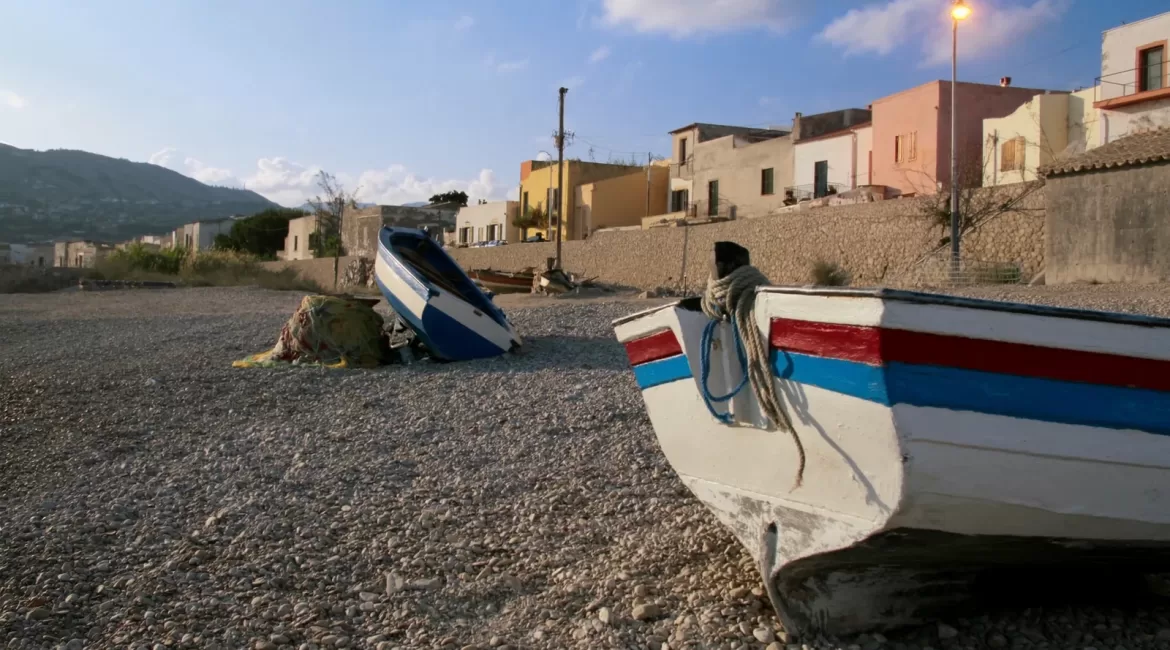
The fishing villages on the Ionian coast of Sicily are not preserved for visitors. They are ordinary working places that happen to sit on a spectacular shoreline, and the food you eat between Giardini Naxos and Taormina still follows what came out of this water and off these slopes rather than what a menu somewhere else decided was Sicilian.
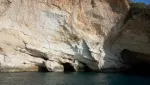
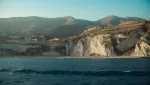
Seen from the sea, the logic of it becomes obvious: a string of settlements strung along the only flat ground there is, each one built where boats could be pulled up.
A coast that has always faced outwards
Giardini Naxos was the first Greek colony in Sicily. That is not a marketing line — it is why the town sits where it does, on a sheltered bay below a headland, with a beach a boat can be dragged onto. Everything that followed on this coast followed the same reasoning. Letojanni, Mazzeo, the small settlements towards Capo Sant’Alessio: all of them are where they are because of the water in front of them.
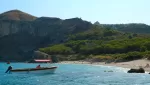
You can still read that from a boat. The old cores are low and tight against the shoreline; the modern town climbs the slope behind. The fishing boats, painted in blues and reds, are pulled up on the pebbles rather than tied in a marina, because that is what you do on a beach with no harbour.
What the sea puts on the table
Swordfish is the signature. The waters off north-eastern Sicily are the historic swordfish grounds, hunted from the Strait of Messina by boats with absurdly long bowsprits and a lookout mast — the feluche — and the fish still turns up everywhere along this coast: grilled in thick steaks, rolled into involtini with breadcrumbs, pine nuts and raisins, or sliced raw.
Below that come the everyday fish that matter more to how people actually eat here:
- Sardines and anchovies, cheap and good, the backbone of a dozen dishes
- Pasta con le sarde — sardines with wild fennel, pine nuts and saffron
- Sarde a beccafico, stuffed and rolled and baked with bay leaves
- Octopus and prawns, often dressed with nothing more than lemon and good oil
And what the land contributes
Behind the beaches, the ground rises quickly into citrus, almond and Etna’s volcanic slopes, and that shows up on the plate as clearly as the fish does. Almonds turn into granita and into the paste behind half the pastries in Sicily. Lemons go into everything. The pistachios come from Bronte, on the other side of the volcano.
The most Sicilian meal of the day is breakfast: granita with a brioche, eaten in the morning heat — almond or coffee, occasionally lemon, sometimes both in the same glass. Locals eat it in the morning and are unbothered by whether it counts as pudding. Later on, Etna’s slopes produce the reds and whites — Nerello Mascalese, Carricante — that have made the volcano’s vineyards fashionable in the last two decades.
Seeing it from the water
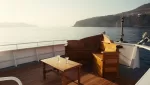
There is a particular pleasure in eating on board, at anchor, with the town you would otherwise be sitting in laid out in front of you. Lunch afloat means the view keeps changing, nobody is waiting for the table, and the swim before and the swim after are both included. It is also the only way to arrive at some of these coves at all, since a good number have no road down to them.
If you want a day that mixes the coast and the food rather than choosing between them, that is worth saying when you plan it — have a look at what a day on this coast can involve.
What fish is Taormina known for?
Swordfish above all — north-eastern Sicily is its historic fishing ground. Sardines, anchovies, octopus and prawns are just as characteristic of everyday cooking along the Ionian coast.
Which fishing villages on the Ionian coast of Sicily are near Taormina?
Giardini Naxos immediately to the south, Letojanni and Mazzeo to the north, and the smaller settlements running up towards Capo Sant’Alessio. All of them are visible — and reachable — from the water.
What should you eat for breakfast in Sicily?
Granita with brioche, in summer at least. Almond and coffee are the classics; the brioche is for dipping, and nobody will think it strange at nine in the morning.
If a day on the water with lunch on board is what you are picturing, tell us when you get in touch — check dates here or message +39 342 110 9242, and we will let you know what is possible for your day.