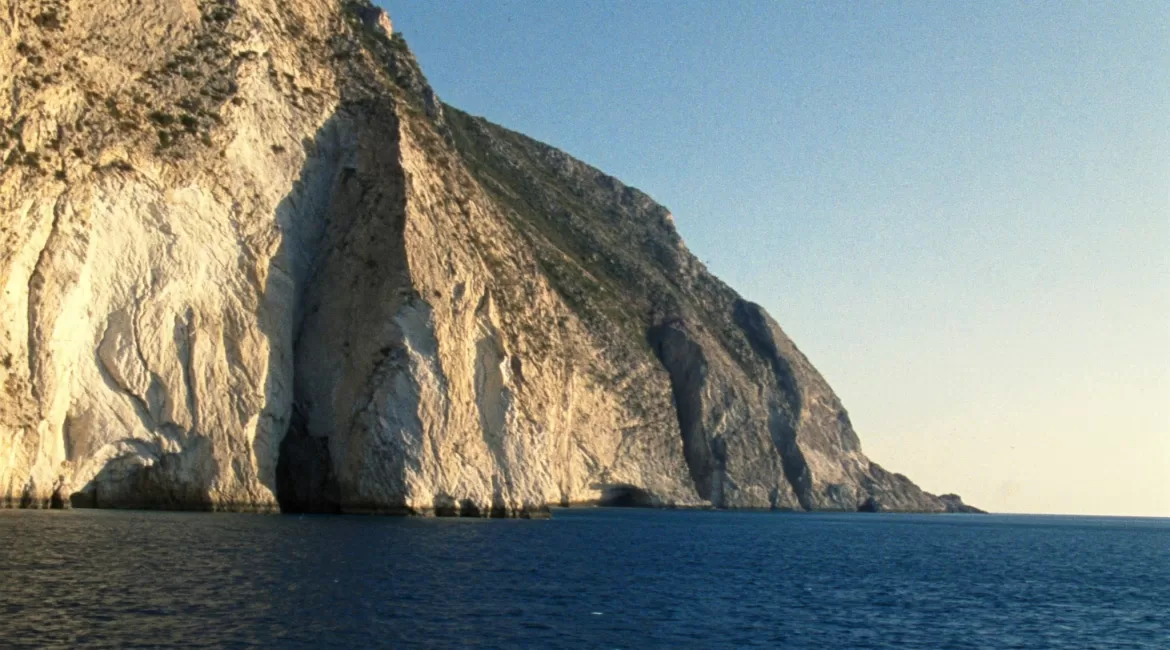
Photographing the Taormina coast by boat solves a problem that every photographer runs into here within about an hour of arriving: from land, everything worth shooting is either behind a railing, backlit, or full of people. The famous viewpoints all face the same way, at the same subject, with the same crowd standing in front of them.
Get on the water and the whole coast opens up. You are shooting towards the land instead of away from it, you can choose your distance, and you can be somewhere at six in the evening that nobody else can reach at all.
The light, and why direction matters here
This stretch of coast faces roughly east, and that single fact should shape your whole plan. In the morning the sun comes up out of the sea and hits the cliffs and the town straight on — clean, frontal light, strong colour in the rock, and the calmest water of the day for reflections. If you want Taormina lit and detailed, with Etna sharp behind it, you want to be out early.
In the late afternoon the sun goes behind the ridge and the coast falls into shadow while the sky above stays bright. That sounds like bad news and is actually the more interesting light: the cliffs go soft and blue, Isola Bella turns into a silhouette with the water still glowing around it, and Etna catches the last warm light long after the shore has cooled. Shoot into that shadow deliberately rather than fighting it.
Midday is the one to be honest about. Contrast is brutal, the sea goes a flat hard blue, and the town washes out. It is, however, the best time for anything underwater or shot down into the coves, because the sun is directly overhead and the light penetrates.
The shots you can only get from the water
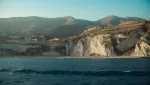
Four things on this coast are effectively boat-only. The first is Taormina itself as a whole — the town, the theatre and Monte Tauro in one frame, seen from far enough out that the composition actually works. From land you can never get far enough away.
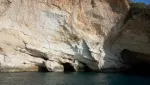
The second is the cave mouths along the cliffs between Mazzarò and Capo Sant’Andrea, including the Grotta Azzurra. Interiors here are a metering problem: the rock is dark, the water is lit from below, and the exposure difference is several stops. Expose for the water, let the rock go black, and you get the image everyone actually wants.
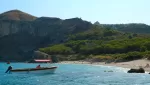
The third is Isola Bella from the seaward side, with its isthmus and the cliff wall rising behind. The fourth is the run of unnamed coves that have no road access — shingle, clear water, nobody in them. In late August that emptiness is worth more than any landmark.
Working from a moving boat
A boat is a tripod that refuses to hold still, so shoot accordingly. Keep the shutter faster than you think you need — around 1/1000 with any real focal length — and accept a higher ISO to get it. Modern sensors handle noise better than they handle motion blur. Continuous autofocus and short bursts will save more frames than careful single shots.
Salt spray is the real enemy. It dries into a haze on the front element that you will not notice until you are back at the hotel, so bring more microfibre cloths than seems sensible and check the glass often. A wide zoom covers most of what you want; something around 70–200mm is what you will reach for when you want to compress the town against the mountain, or isolate a single boat against a cliff.
If you are shooting in and out of the water, a housing or a rugged action camera earns its place at the snorkelling stops, where the visibility in the sheltered coves does a lot of the work for you.
Planning a trip around photographing the Taormina coast by boat
Tell us what you are trying to shoot. It changes everything about how the day is run — where we go first, how long we sit in one spot, how close we can get to a cliff, whether we chase the light at the end of the day or the calm water at the start.
A shorter coastal excursion is enough for the classic frames if you know what you want. A half-day or full-day rental is better if you want to work properly — waiting for light, going back to a spot when the sun has moved, drifting rather than motoring. The sunset tour is the obvious choice for golden hour, and a custom trip is worth asking about if your shot list has a specific hour attached to it.
What is the best time of day to photograph Taormina from the sea?
Early morning for clean frontal light on the town and glassy water; late afternoon and sunset for atmosphere, silhouettes and colour in the sky. Midday suits underwater and cove shots but is harsh on the landscape.
Can you take a drone on a boat trip?
Ask us first. Drone rules in Italy depend on where you are flying, and some areas along this coast are protected — including the Isola Bella reserve. Do not assume, and do not launch without checking.
Is the water clear enough for underwater photos?
In the sheltered coves near Isola Bella, usually yes, and it is at its best around the middle of the day when the light is coming straight down. Visibility varies with wind and swell.
If you have a shot list and a limited number of evenings, message Nicolò or Alessandro on WhatsApp at +39 342 110 9242 and we will tell you honestly what is achievable and when. You can also start from our reservations page.