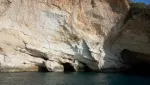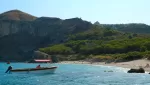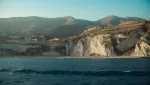
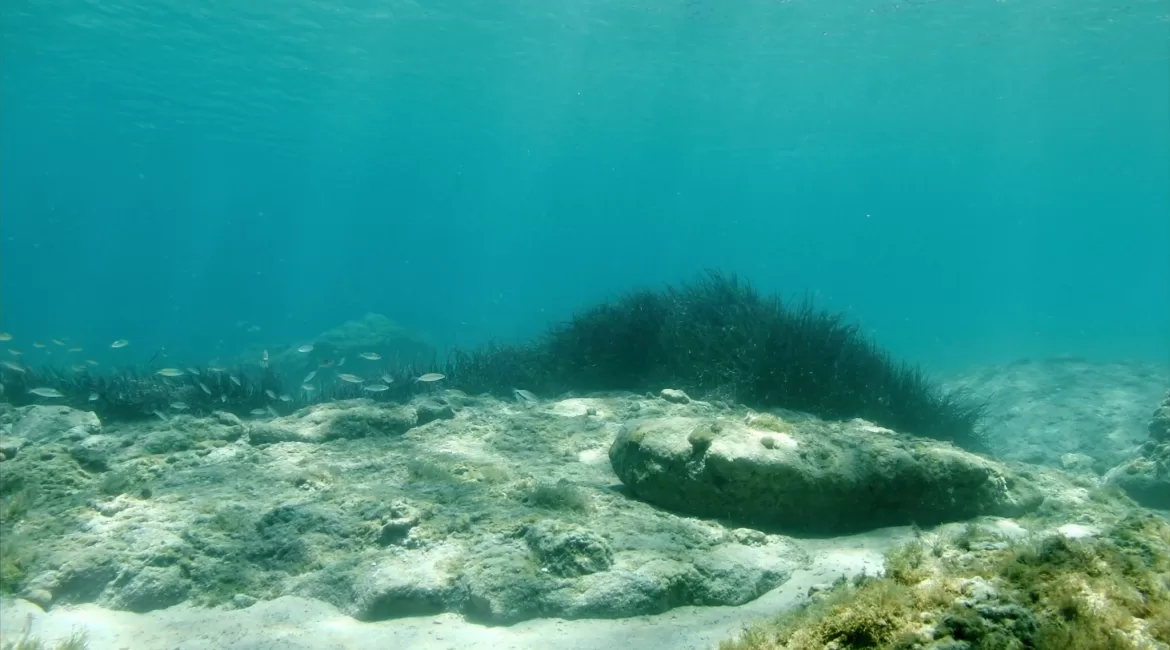
Ask what marine life off the Taormina coast looks like and most people picture either dolphins or nothing. The truth sits in between and is a good deal more interesting: a rocky Mediterranean coastline with clear water, deep drop-offs close to shore, and a protected reserve in the middle of it, which adds up to a lot of things worth looking at if you know where to point your eyes.
Here is what is actually out there, from the surface down.
Under the boat: the rocky shallows
The coves between Isola Bella and Capo Sant’Andrea are the easiest place to see things, because the water is shallow, clear and full of structure. Put a mask on and the first thing you will notice is movement in the top metre — loose shoals of salema, silver with faint gold stripes, grazing along the rock. Below them, damselfish hang in the blue in dense clouds, all facing the same way like iron filings.
Work along the rock itself and it gets better. Wrasse are the ones that surprise visitors: several species along this coast, some of them green and orange in a way that looks tropical and out of place. Blennies and gobies sit propped on their fins in the crevices, watching you and not moving until you get too close. Sea urchins are everywhere, black and spiny, wedged into every gap — a reason to wear something on your feet, and also a sign of a healthy rocky shore.
On the sandy patches between boulders, look for mullet nosing the bottom in small groups, and for the puff of sand that gives away a flatfish you had been staring straight at.
The seagrass meadows
Where the seabed flattens out you will find dark green-brown patches that look, from the boat, like shadow or rock. They are Posidonia oceanica — a flowering plant, not a weed, and the nursery of the entire Mediterranean. It is where juvenile fish hide, where seahorses occasionally turn up, and where much of the oxygen in this water is produced.
Snorkel over the edge of a meadow and the density of small life is obvious: little fish everywhere, pipefish if you are lucky and patient. Two things worth knowing. The dried strands that pile up on beaches in autumn are not dirt — they protect the shore from erosion. And meadows are slow-growing and easily damaged, which is one of the reasons anchoring is controlled around the Isola Bella reserve.
Out in the blue: dolphins and bigger visitors
Dolphins do live along this coast, and bottlenose are the ones most often seen off Taormina and Giardini Naxos. They turn up in ones and twos or in a group of a dozen, usually early, usually in calm water, and always without warning. Anybody who tells you a sighting is guaranteed is selling you something — they are wild animals covering a lot of sea. When it happens it is the best ten minutes of the trip.
Loggerhead turtles pass through the Ionian and are seen occasionally, generally as a head breaking the surface a long way off. Flying fish are more common than most visitors expect in late summer, skittering away from the bow in a flat silver arc. And around the cliffs there are seabirds working the water — gulls, shearwaters cutting the surface with a wingtip — which are often the first sign that something is feeding below.
Watching well, without doing damage
A few habits make the difference between seeing things and scattering them. Move slowly and stop kicking when you want a closer look; almost everything here is camouflaged and reacts to noise and shadow before it reacts to you. Do not touch, chase or corner anything, and do not lift creatures out for a photograph. Take nothing off the seabed — the reserve is protected, and the coast is better with its urchins and starfish where they are.
If dolphins appear, the right move is to stop and let them decide. Chasing a pod ends the encounter faster than anything else.
Jellyfish come and go with wind and current in late summer, sometimes in numbers, sometimes not at all for weeks. If there are any about we will see them before you are in the water. Ask when you get in touch and we will tell you what the last few days have looked like — that is a far better guide than anything written in advance.
What is the best way to see marine life off the Taormina coast?
Snorkelling on a swimming stop in the sheltered coves gives you the most, because the water is clear and the rock holds fish. Going out early helps: calmer water means better visibility and a better chance of dolphins.
Are there dangerous animals in the sea off Taormina?
Nothing to worry about. Sea urchins are the realistic hazard, and reef shoes deal with them. Jellyfish appear seasonally and unpredictably.
Can you snorkel at Isola Bella?
The water around the island is clear and full of life, and it is a nature reserve — so follow the rules in force, keep off the fragile seabed and take nothing away with you.
If you want a trip built around swimming and snorkelling stops rather than covering distance, tell us — a half-day or full-day on the water gives you time to sit over the good spots. Message Nicolò or Alessandro on WhatsApp at +39 342 110 9242, or book through our reservations page.