Most people meet the Isola Bella nature reserve from above, leaning over the railing on the road down from Taormina, phone held out. It is a fine view. It is also the one angle that tells you least about what the place actually is.
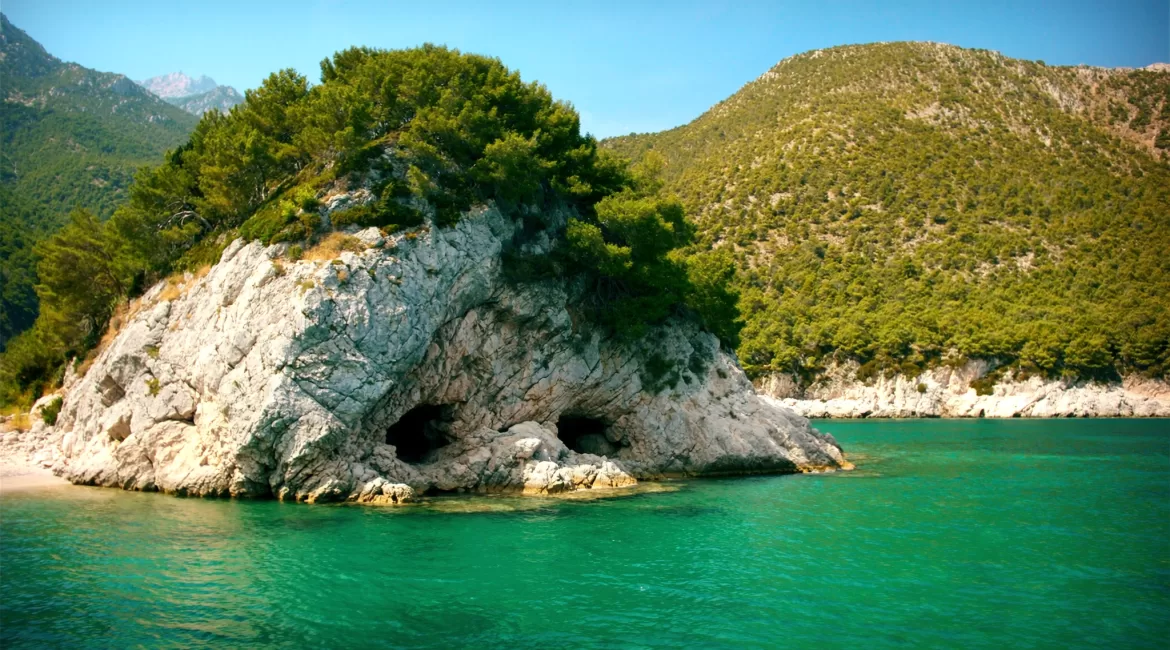
Come at it from the sea and the island stops being a shape and becomes a small, strange ecosystem: a lump of limestone covered in exotic planting, ringed by grottoes, with a seabed around it that is doing far more interesting work than the beach in front of it.
What the reserve is, and why it exists
Isola Bella is a protected area covering the island itself and the water immediately around it. Its odd character comes from its history — in the late nineteenth century it belonged to Florence Trevelyan, an Englishwoman who settled in Taormina and treated the rock as a private garden, planting species from all over the world among the native scrub and building small structures into the terraces.
The result is a botanical oddity: Mediterranean maquis growing alongside plants that have no business being on a Sicilian islet. It later passed into public hands and was designated a nature reserve, which is why access on land is regulated and why boats keep their distance from certain stretches of shoreline.
Those rules are the reason the water there still looks the way it does. They are worth respecting even when they are inconvenient.
What you see from the water
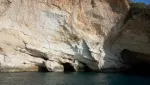
The seaward side is the half of the island nobody photographs. Approaching from the south, the rock rises in slabs and fissures, with the vegetation spilling over the top edge and dropping down towards the waterline. There are hollows and small caves cut into the base, and where the light gets under them the water goes a deep, lit blue.
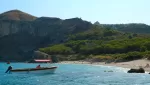
Between the island and the mainland runs the isthmus — the ribbon of pebbles that appears and disappears depending on the sea. Watching it from a boat, you understand the geography instantly in a way no photograph from the road conveys: Isola Bella is not quite an island and not quite attached, and the sea decides which on any given day.
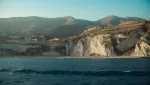
Behind it, the cliff goes up and Taormina sits on top of it, the Greek Theatre visible on the skyline. On a clear morning in August you get Etna as well, pale behind the town.
What lives there
Under the surface, the interest is in the edges. Around the rocks you will typically see:
- Wrasse and damselfish in numbers, working the shallow rock shelves.
- Sea urchins in the crevices — another good reason for water shoes.
- Octopus, if you are patient and look for a tidy pile of shells outside a hole rather than for the animal itself.
- Salema and mullet shoaling over the sandy patches where the light comes through.
Above the water, the island’s cover is used by seabirds and by migrants passing along the coast, which is part of why the reserve exists at all. Take a mask if you have one; the snorkelling here is the best of any easily reachable spot on this stretch of coast.
How to visit it responsibly
The reserve works because people treat it as one. That means keeping to the marked areas on land, not taking pebbles or shells home, not feeding fish, and staying off the vegetation. From a boat it means respecting the no-go zones, approaching slowly, and never anchoring anywhere that could damage the bottom.
Skippers who work this coast every week — Nicolò and Alessandro among them — know exactly where the boundaries run, which is the practical argument for seeing the reserve with somebody local rather than steering a rented dinghy towards it and hoping.
Can you go onto Isola Bella itself?
Yes. The island is open to visitors as a protected site, reached across the pebble isthmus from the beach, with regulated access and the villa’s rooms and terraces to walk through. It is a separate experience from seeing it by sea, and the two complement each other well.
Is snorkelling allowed in the reserve?
Swimming and snorkelling around the bay are normal, within the protected-area rules. Nothing may be collected or disturbed — you look, and you leave it exactly as you found it.
What is the best way to see the Isola Bella nature reserve?
Both ways, ideally: walk the island early in the day, then see the seaward side from the water, where the grottoes and the true shape of the rock are. If you would like to do the second half, the crew runs excursions along this coast most days — the reservations page has the options, or message +39 342 110 9242 on WhatsApp and tell us when you are here. More on what we do is on the Taormina Boat Service homepage.