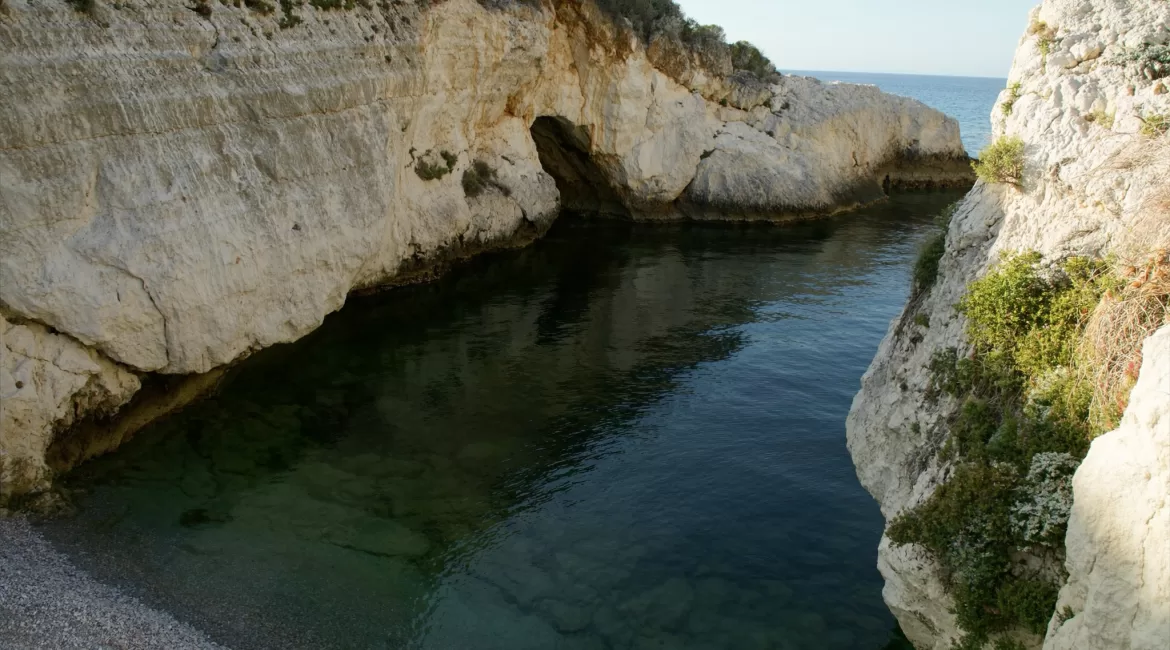
The hidden coves near Taormina do not announce themselves. From the coast road you see cliff, guardrail and the occasional glimpse of blue; from the water you see the gaps — a fold in the rock, a strip of white pebbles, a patch of green shade under a fig tree that has somehow found a crack to grow out of. Between Isola Bella and the headland of Capo Sant’Andrea there are a dozen of these, and most of them have no road, no bar and no name that anyone agrees on.
This is the part of the coastline that makes people go quiet. Not because it is dramatic — the drama is all above, in the cliffs and the town balanced on top of them — but because it is small, clear and unexpectedly private in a place that is anything but private in August.
What the coast is actually made of
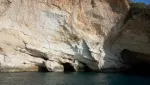
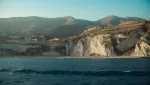
The cliffs here are pale limestone, undercut at the waterline by a few thousand years of swell. That undercutting is what creates the whole character of the stretch: sea caves, arches, overhangs you can nose a small boat under, and narrow inlets where the rock closes in on both sides and the water goes an improbable green.
The bottom is mostly boulder and clean sand, with meadows of posidonia in the deeper patches. That combination is why visibility here is so consistently good — very little silt gets stirred up, and there is no river mouth nearby to cloud it. On a calm morning you can see your own shadow on the bottom in eight metres of water.
The character of the coves, one by one
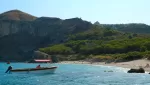
They are not interchangeable, which is the pleasure of it. Some are pure swimming pools: deep the moment you leave the rock, sheltered from any wind that matters, and best entered by simply stepping off the boat. Others have a genuine pebble beach at the back, small enough that four people constitutes a crowd, and shade until late morning where the cliff overhangs.
Then there are the ones that are really just a gap in the rock — no beach at all, room for one boat, walls going straight down. Those are the best snorkelling. Fish gather where the structure is complicated, and complicated is exactly what that geology produces: ledges, cracks, boulders piled against the base of the cliff, and light coming in sideways under the overhang.
Baia delle Sirene and the bay of Mazzarò are the well-known names on this stretch and they earn their reputation, but they are also the reachable ones, which in high summer means the busy ones. The quiet water starts where the paths stop.
Capo Sant’Andrea and the caves
The headland of Capo Sant’Andrea is riddled. The Grotta Azzurra is the famous one — a cave where light entering below the surface reflects off a pale bottom and fills the whole chamber with blue — but it is one of several. Some are open enough to swim into, some are better appreciated from just outside, and which is which depends entirely on the swell that day.
The blue in the Blue Grotto is a matter of timing. It needs sun, and it needs the sun at the right angle to get under the entrance. Mid-morning to early afternoon is generally when it performs. This is the sort of thing that sounds like fussiness until you see it happen, at which point it is obvious why anyone bothers.
Going quietly
These coves stay good because not many people are in them at once. A few things help keep it that way:
- Anchor on sand, never on the seagrass meadows — they take decades to recover and they are the reason the water is clear.
- Take everything out with you, including fruit peel.
- Keep the noise down. Sound bounces off a limestone wall in a way that carries a long way over flat water.
- Leave the shells, the urchins and the rocks where they are.
Can you reach these coves without a boat?
A handful, with effort — there are steep paths and steps down to some of the bays, and Mazzarò and Isola Bella have proper access. Most of the small inlets between them do not, which is precisely why they are still worth going to. Swimming along the coast from a public beach is not a good idea: there is boat traffic and there is no easy exit if the wind picks up.
When is the sea calmest?
Early morning, almost always. The land breeze drops overnight and the water is often mirror-flat until mid-morning, when the thermal breeze starts. Late afternoon usually settles again. In practice the first trip of the day gives you the clearest water and the best chance of having a cove to yourself.
What should you bring?
A mask and snorkel above everything else — this coast is wasted without one. Then water shoes for pebble landings, a hat, plenty of drinking water, and a light long-sleeved top for the middle of the day, which is hotter on the water than it feels.
The coves do not appear on any map worth following, so the honest answer to “which one is best” is “whichever one the sea is behaving in today”. That is a call the skipper makes on the morning. If you would like to see them, talk to us on WhatsApp at +39 342 110 9242 or book through the reservations page — a half day is usually enough to do three or four of them properly.