Ask anyone who swims here regularly and they will tell you the clearest water near Taormina is not in one fixed place. It moves. The same cove can be glass on Tuesday and milky on Thursday, and the reason has almost nothing to do with pollution and almost everything to do with what the bottom is made of and what the wind did yesterday.
Once you understand the pattern, you stop hoping for good visibility and start predicting it.
What actually makes water clear
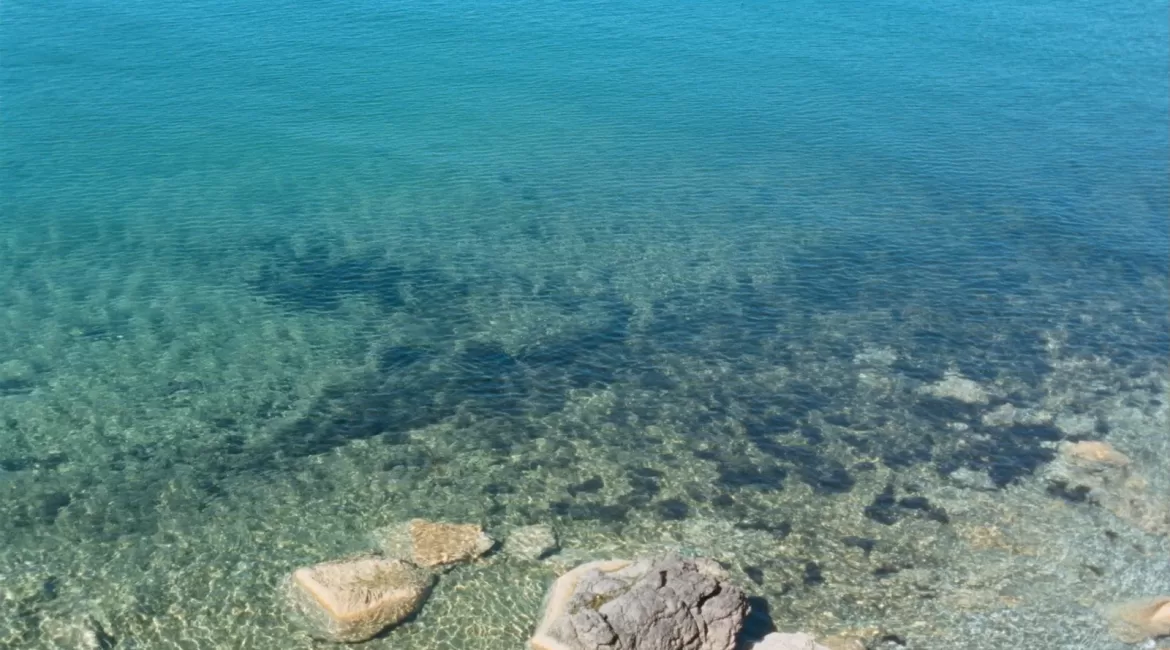
Three things, mostly. The first is suspended sediment: fine sand and silt lifted off the bottom by waves and by swimmers, which hangs in the water until it settles. The second is plankton, which blooms and fades with the seasons and gives water a green cast when it is abundant. The third is depth and bottom colour — pale sand reflects light back up and makes shallow water glow, while dark rock and seagrass absorb it and read as deep blue.
That third factor confuses people. A bay over dark posidonia meadow can be far cleaner than a bay over sand and still look less inviting, because it does not have that luminous turquoise shimmer. In fact posidonia is a good sign: the seagrass meadows off this coast stabilise the seabed, hold sediment down and shelter the small fish that make snorkelling worth doing.
Why the coast below Taormina does well
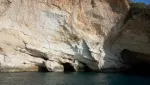
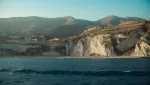
The stretch from Capo Taormina to Capo Sant’Andrea is mostly rock. Cliffs drop straight into deep water, the seabed is boulder and pebble rather than fine sand, and there is very little sediment available to be stirred up in the first place. Add that the water gets deep quickly, and you have the ingredients for the visibility that makes the sea caves worth entering.
Isola Bella sits at the exception. The strait between the island and the shore is shallow and pebbled, which is exactly what makes it photogenic — and also what makes it the first place to cloud up on a busy day, when hundreds of pairs of feet are working the shallows.
When to go for the best visibility
Wind history matters more than today’s forecast. A couple of settled days with light wind will drop the sediment out of the water column and leave it startlingly clear; a night of onshore swell will undo that by breakfast. If yesterday was rough, be patient.
- Early morning — before the day’s boats, swimmers and afternoon breeze get to work
- After a run of calm days, which September delivers more reliably than midsummer
- Sun high enough to penetrate, roughly mid-morning onwards, for colour underwater
- Away from the busiest shallows, in coves with rock or seagrass rather than fine sand
Early autumn is quietly the best of it. The water is still warm, the summer traffic has thinned, and the settled high-pressure spells give you the flat, undisturbed conditions that clarity depends on.
Finding the clearest water near Taormina from a boat
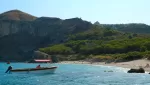
The advantage of being afloat is not just reaching the coves without a road down to them — it is being able to move. If the first anchorage is disappointing, the second is ten minutes away, and someone who has looked over the side of a boat on this coast a thousand times can usually tell from the colour before anyone gets wet.
The mouths of the sea caves are the reliable showpiece. Light entering the water outside and refracting into the cave is what produces the glow in the Grotta Azzurra, and that effect depends entirely on the water outside being clean enough to transmit it. On a clear morning it is genuinely startling. On a churned-up afternoon it is grey. Same cave, same route, entirely different experience — which is why the timing of a trip along this coast is worth thinking about.
When is the water clearest around Taormina?
After several consecutive calm days, and early in the morning before the day’s activity stirs the shallows. Late spring and early autumn tend to produce the most settled spells, with early September often the sweet spot: warm water, calm mornings and few boats.
Is the water at Isola Bella clear?
Usually, yes — the strait is shallow and bright. It is also the busiest patch of water on this coast, so it clouds faster than the rockier coves nearby when there are a lot of people in it. Go early, or go round the corner.
Does seagrass mean the water is dirty?
No, the opposite. Posidonia meadows are a sign of healthy, well-oxygenated water, and they hold sediment on the bottom rather than in suspension. They simply make the sea look darker from above.
If you want to be in the water at the point in the day when it is at its best, ask us before you fix a time — message +39 342 110 9242 or use the reservations page. We watch this coast every day and are happy to say which morning of your week looks like the good one.